Media & Updates
Media & Updates
Media & Updates

5th August 2026
5th August 2026
5th August 2026
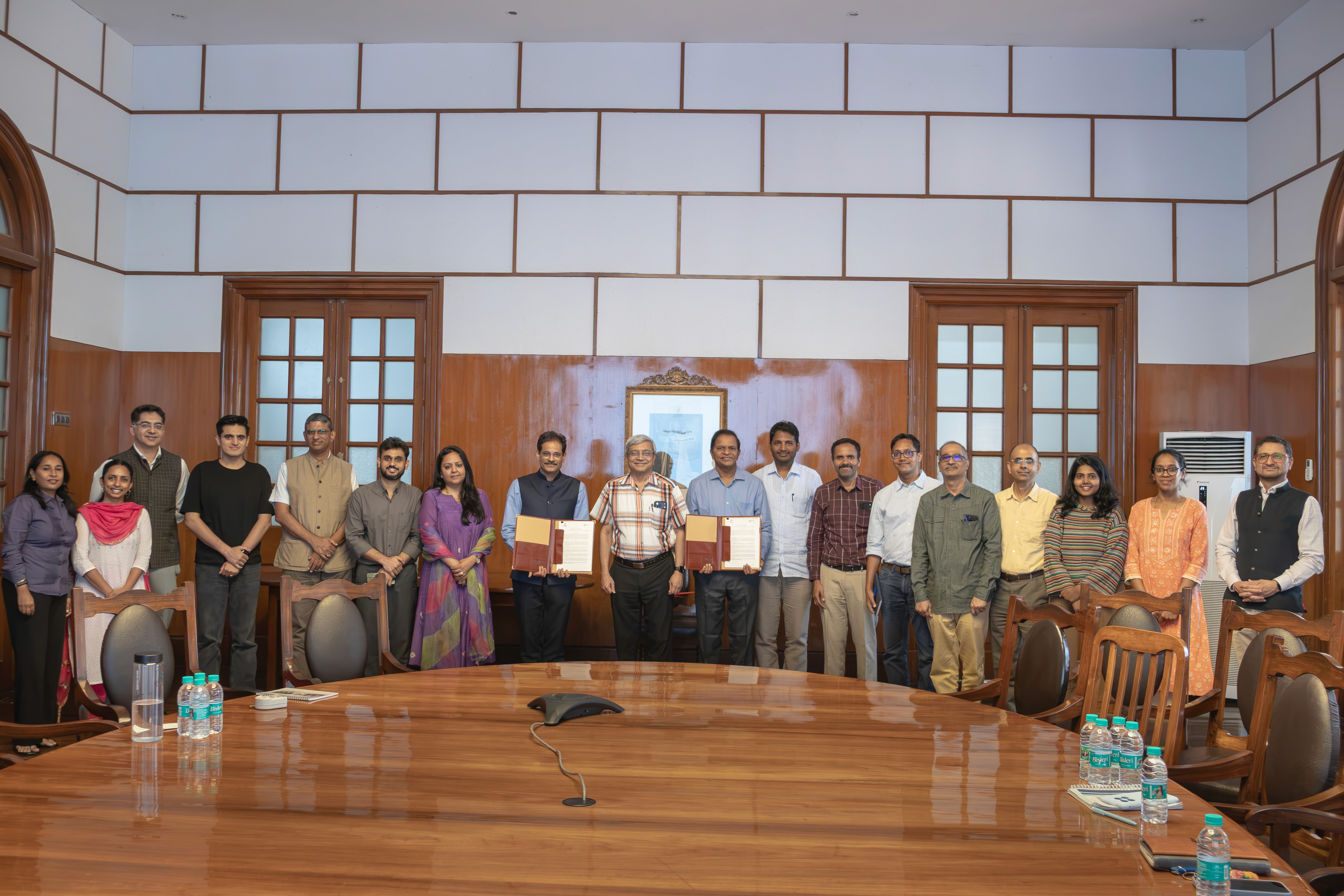
TANUH and the Indian Institute of Science, together with the Koita Foundation and the Gates Foundation, are pleased to announce Voice to Medical Records (V2MR), a project that develops AI voice technologies to convert clinician-patient conversations into structured, standards-compliant medical records.
Healthcare professionals spend a significant portion of their day documenting patient encounters rather than attending to patients. Clinical documentation underpins continuity of care, compliance, billing and research, but it is repetitive, time-consuming and a recognised contributor to physician burnout, a burden that has grown as electronic medical records have become standard.
Advances in speech recognition, speaker diarization and large language models now make it possible to convert clinical conversations into structured records at the point of care. Integrated with standards such as HL7 FHIR and SNOMED CT, these technologies can reduce administrative load, increase interoperability and return clinician time to patients.
Systems of this kind exist; however, they are built for English and Western clinical settings. Indian consultations happen in Indic languages, with code-mixing, dialectal variation and medical complexity that these systems were never designed to handle. There is also no reliable benchmark for measuring how well any of them perform here.
V2MR addresses both gaps, advancing voice-based documentation for Indian settings while developing frameworks to assess quality, compliance and real-world use. The goal is not only to help clinicians document efficiently but to equip the healthcare ecosystem to evaluate, adopt and govern these systems responsibly.
TANUH and the Indian Institute of Science, together with the Koita Foundation and the Gates Foundation, are pleased to announce Voice to Medical Records (V2MR), a project that develops AI voice technologies to convert clinician-patient conversations into structured, standards-compliant medical records.
Healthcare professionals spend a significant portion of their day documenting patient encounters rather than attending to patients. Clinical documentation underpins continuity of care, compliance, billing and research, but it is repetitive, time-consuming and a recognised contributor to physician burnout, a burden that has grown as electronic medical records have become standard.
Advances in speech recognition, speaker diarization and large language models now make it possible to convert clinical conversations into structured records at the point of care. Integrated with standards such as HL7 FHIR and SNOMED CT, these technologies can reduce administrative load, increase interoperability and return clinician time to patients.
Systems of this kind exist; however, they are built for English and Western clinical settings. Indian consultations happen in Indic languages, with code-mixing, dialectal variation and medical complexity that these systems were never designed to handle. There is also no reliable benchmark for measuring how well any of them perform here.
V2MR addresses both gaps, advancing voice-based documentation for Indian settings while developing frameworks to assess quality, compliance and real-world use. The goal is not only to help clinicians document efficiently but to equip the healthcare ecosystem to evaluate, adopt and govern these systems responsibly.
TANUH and the Indian Institute of Science, together with the Koita Foundation and the Gates Foundation, are pleased to announce Voice to Medical Records (V2MR), a project that develops AI voice technologies to convert clinician-patient conversations into structured, standards-compliant medical records.
Healthcare professionals spend a significant portion of their day documenting patient encounters rather than attending to patients. Clinical documentation underpins continuity of care, compliance, billing and research, but it is repetitive, time-consuming and a recognised contributor to physician burnout, a burden that has grown as electronic medical records have become standard.
Advances in speech recognition, speaker diarization and large language models now make it possible to convert clinical conversations into structured records at the point of care. Integrated with standards such as HL7 FHIR and SNOMED CT, these technologies can reduce administrative load, increase interoperability and return clinician time to patients.
Systems of this kind exist; however, they are built for English and Western clinical settings. Indian consultations happen in Indic languages, with code-mixing, dialectal variation and medical complexity that these systems were never designed to handle. There is also no reliable benchmark for measuring how well any of them perform here.
V2MR addresses both gaps, advancing voice-based documentation for Indian settings while developing frameworks to assess quality, compliance and real-world use. The goal is not only to help clinicians document efficiently but to equip the healthcare ecosystem to evaluate, adopt and govern these systems responsibly.
The AI Centre of Excellence in Healthcare
AI Centre of Excellence in Healthcare
Indian Institute of Science
Seventh Floor, TCS Smart-X Hub
Bengaluru, India - 560 012
Email: info@tanuh.ai
Telephone: (080) 2293 4106 | (080) 2293 4107
2026 by TANUH
The AI Centre of Excellence in Healthcare
AI Centre of Excellence in Healthcare
Indian Institute of Science
Seventh Floor, TCS Smart-X Hub
Bengaluru, India - 560 012
Email: info@tanuh.ai
Telephone: (080) 2293 4106 | (080) 2293 4107
2026 by TANUH
The AI Centre of Excellence in Healthcare
AI Centre of Excellence in Healthcare
Indian Institute of Science
Seventh Floor, TCS Smart-X Hub
Bengaluru, India - 560 012
Email: info@tanuh.ai
Telephone: (080) 2293 4106 | (080) 2293 4107
2026 by TANUH

