Retinal Disease Detection (ChákṣuAI)
Retinal Disease Detection (ChákṣuAI)
Retinal Disease Detection (ChákṣuAI)
An AI-Enabled Retinal Fundus-Based Screening Platform
for Glaucoma, Diabetic Retinopathy, and Age-Related Macular Degeneration
An AI-Enabled Retinal Fundus-Based Screening Platform
for Glaucoma, Diabetic Retinopathy, and Age-Related Macular Degeneration
An AI-Enabled Retinal Fundus-Based Screening Platform
for Glaucoma, Diabetic Retinopathy, and Age-Related Macular Degeneration

Overview
Overview
Overview
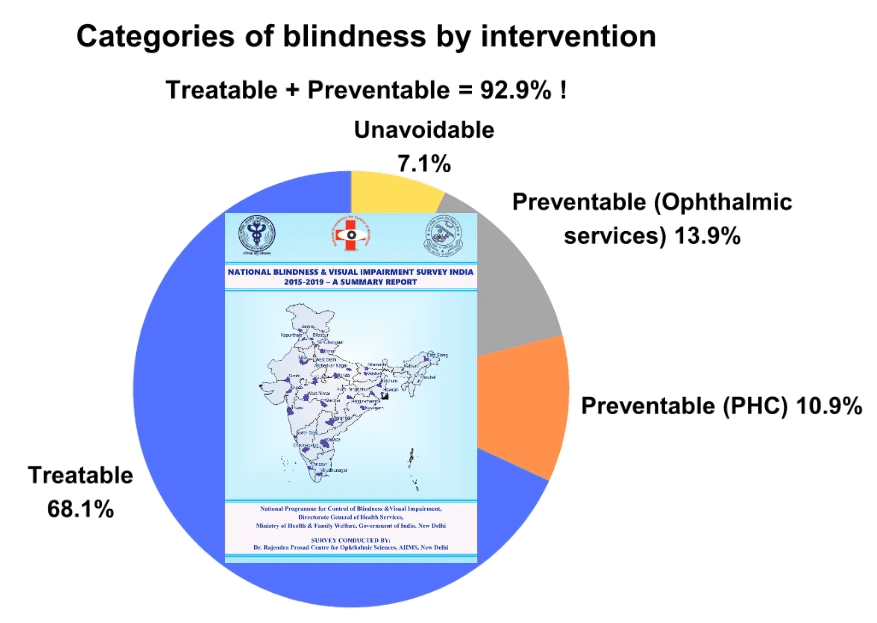
India faces a growing burden of vision impairment, the majority of which is preventable. The National Blindness & Visual Impairment Survey (2015-2019) revealed that a staggering 92.9% of all blindness cases in India are either preventable or treatable. This challenge stems from a lack of timely prescreening and care, imposing a significant socio-economic burden estimated at ₹1.158 lakh crore in 2019, or 0.57% of the nation’s GDP.
This gap is particularly wide in rural areas, where Primary Healthcare Centers (PHCs) often lack the advanced diagnostic tools needed for early detection. Furthermore, most existing AI models are trained on Western populations and tend to underperform or exhibit bias when applied to India's diverse demographics. This creates a critical need for India-specific datasets and AI models.
India faces a growing burden of vision impairment, the majority of which is preventable. The National Blindness & Visual Impairment Survey (2015-2019) revealed that a staggering 92.9% of all blindness cases in India are either preventable or treatable. This challenge stems from a lack of timely prescreening and care, imposing a significant socio-economic burden estimated at ₹1.158 lakh crore in 2019, or 0.57% of the nation’s GDP.
This gap is particularly wide in rural areas, where Primary Healthcare Centers (PHCs) often lack the advanced diagnostic tools needed for early detection. Furthermore, most existing AI models are trained on Western populations and tend to underperform or exhibit bias when applied to India's diverse demographics. This creates a critical need for India-specific datasets and AI models.
India faces a growing burden of vision impairment, the majority of which is preventable. The National Blindness & Visual Impairment Survey (2015-2019) revealed that a staggering 92.9% of all blindness cases in India are either preventable or treatable. This challenge stems from a lack of timely prescreening and care, imposing a significant socio-economic burden estimated at ₹1.158 lakh crore in 2019, or 0.57% of the nation’s GDP.
This gap is particularly wide in rural areas, where Primary Healthcare Centers (PHCs) often lack the advanced diagnostic tools needed for early detection. Furthermore, most existing AI models are trained on Western populations and tend to underperform or exhibit bias when applied to India's diverse demographics. This creates a critical need for India-specific datasets and AI models.
Our Goal
Our Goal
Our Goal
To identify major eye diseases, including glaucoma, diabetic and hypertensive retinopathy, and age-related macular degeneration.
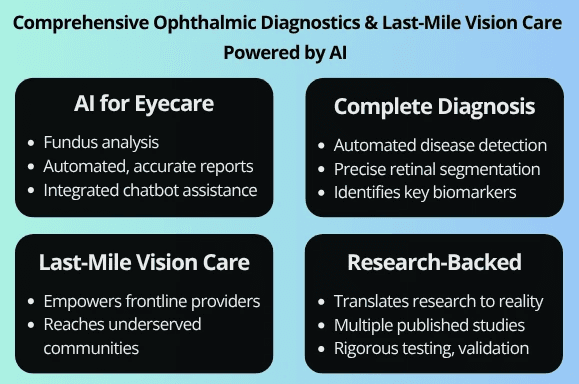
To identify major eye diseases, including glaucoma, diabetic and hypertensive retinopathy, and age-related macular degeneration.
To identify major eye diseases, including glaucoma, diabetic and hypertensive retinopathy, and age-related macular degeneration.
To provide a comprehensive retinal analysis, including abnormality detection, retinal segmentation, and visual explanations for decisions, and generate a comprehensive report.
To provide a comprehensive retinal analysis, including abnormality detection, retinal segmentation, and visual explanations for decisions, and generate a comprehensive report.
To provide a comprehensive retinal analysis, including abnormality detection, retinal segmentation, and visual explanations for decisions, and generate a comprehensive report.
To conduct pilot studies across multiple PHCs, validate the performance, and fine-tune the AI models based on the data collected from the pilot study.
To conduct pilot studies across multiple PHCs, validate the performance, and fine-tune the AI models based on the data collected from the pilot study.
To conduct pilot studies across multiple PHCs, validate the performance, and fine-tune the AI models based on the data collected from the pilot study.
To create a comprehensive, annotated dataset of retinal fundus images from the Indian population collected during the pilot study.
To create a comprehensive, annotated dataset of retinal fundus images from the Indian population collected during the pilot study.
To create a comprehensive, annotated dataset of retinal fundus images from the Indian population collected during the pilot study.
To develop an edge solution for performing screening in remote locations without proper internet access.
To develop an edge solution for performing screening in remote locations without proper internet access.
To develop an edge solution for performing screening in remote locations without proper internet access.
Impact & Vision
Impact & Vision
Impact & Vision
Key numbers & milestones
Key numbers & milestones
Key numbers & milestones
The foundational ChákṣuAI platform is at TRL-4 (functional prototype demonstrated in lab)
The foundational ChákṣuAI platform is at TRL-4 (functional prototype demonstrated in lab)
The foundational ChákṣuAI platform is at TRL-4 (functional prototype demonstrated in lab)
Team & Collaborators
Team & Collaborators
Team & Collaborators
Principal Investigator
Principal Investigator
Principal Investigator
Chandra Sekhar Seelamantula
Chandra Sekhar Seelamantula
Chandra Sekhar Seelamantula
Professor
Department of Electrical Engineering, IISc
Personal website
Professor
Department of Electrical Engineering, IISc
Personal website
Professor
Department of Electrical Engineering, IISc
Personal website
Co-Principal Investigator
Co-Principal Investigator
Co-Principal Investigator
Radhika Tandon
Radhika Tandon
Radhika Tandon
Professor
Ophthalmology, AIIMS
Professor
Ophthalmology, AIIMS
Professor
Ophthalmology, AIIMS
Team
Team
Team
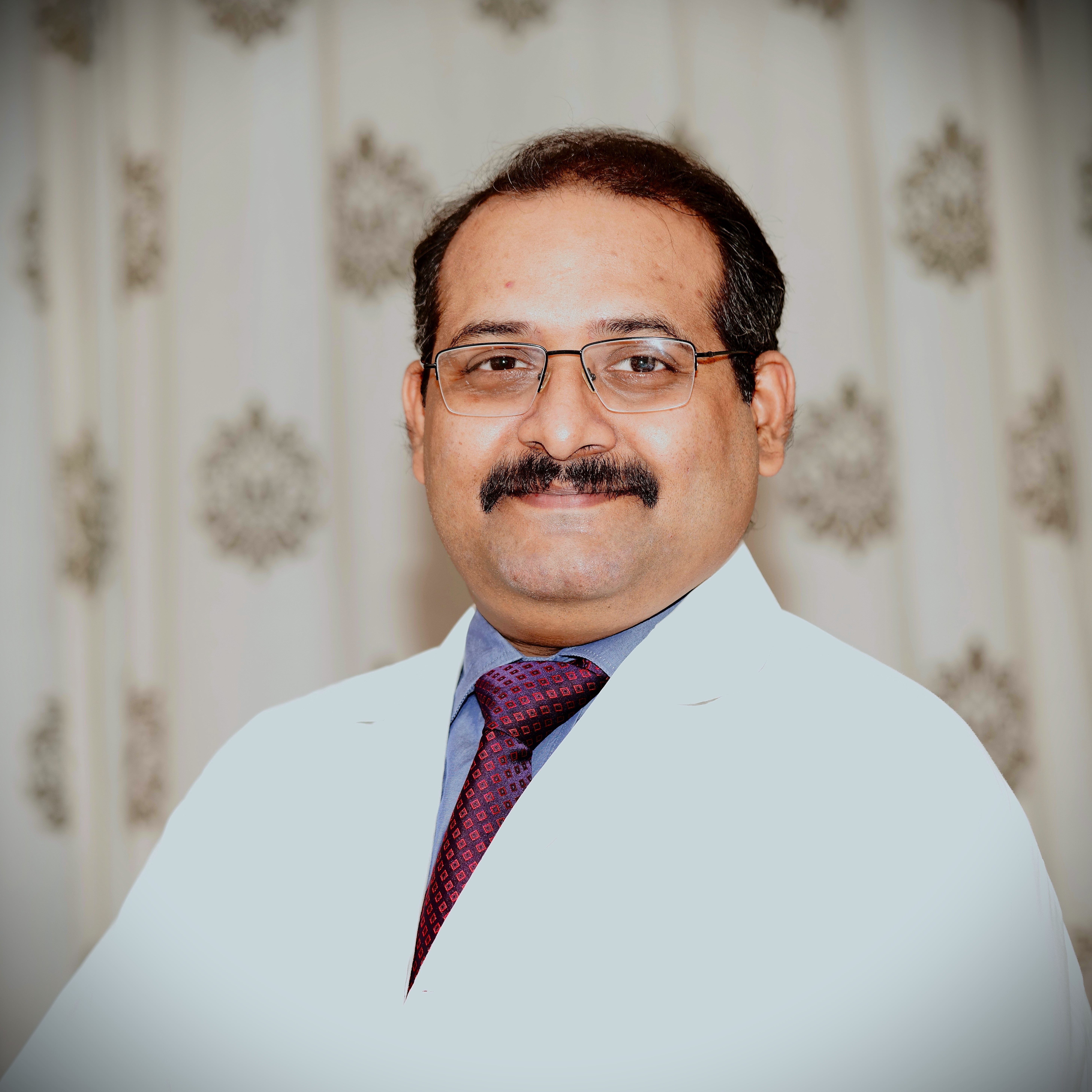
Aditya Barigali
Aditya Barigali
Aditya Barigali
Program Manager
Program Manager
Program Manager
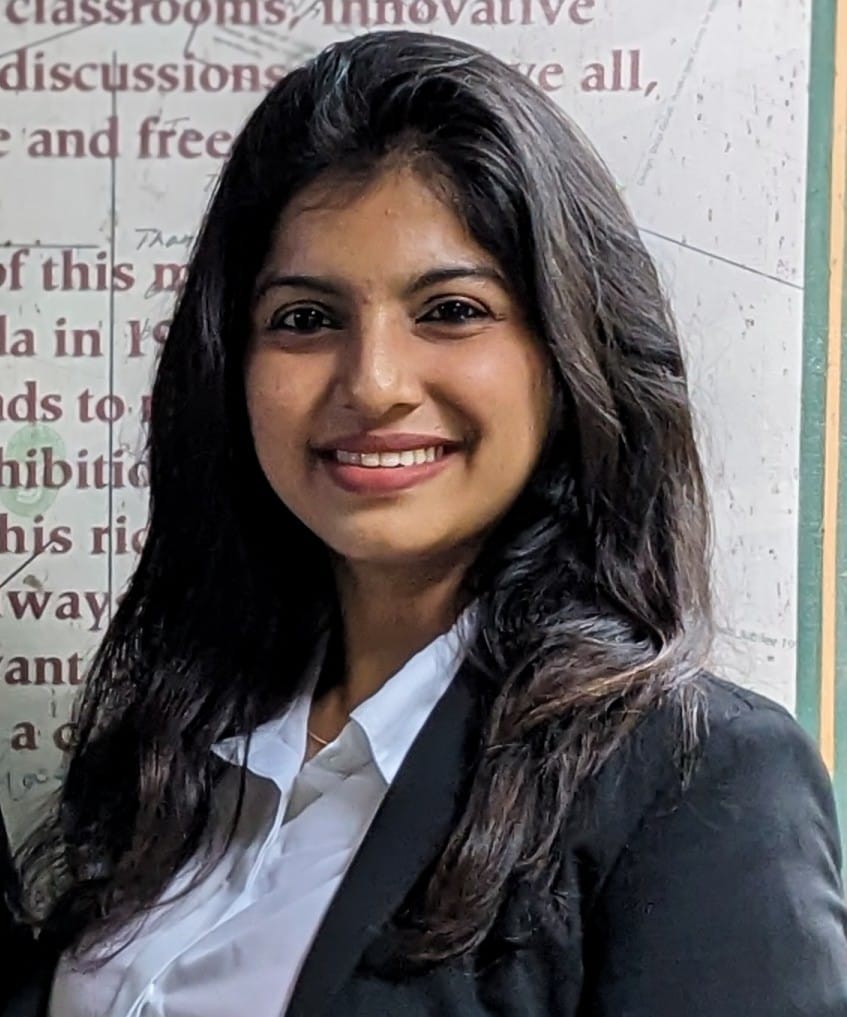
Anagha Unnikrishnan
Anagha Unnikrishnan
Anagha Unnikrishnan
Public Health Specialist
Public Health Specialist
Public Health Specialist
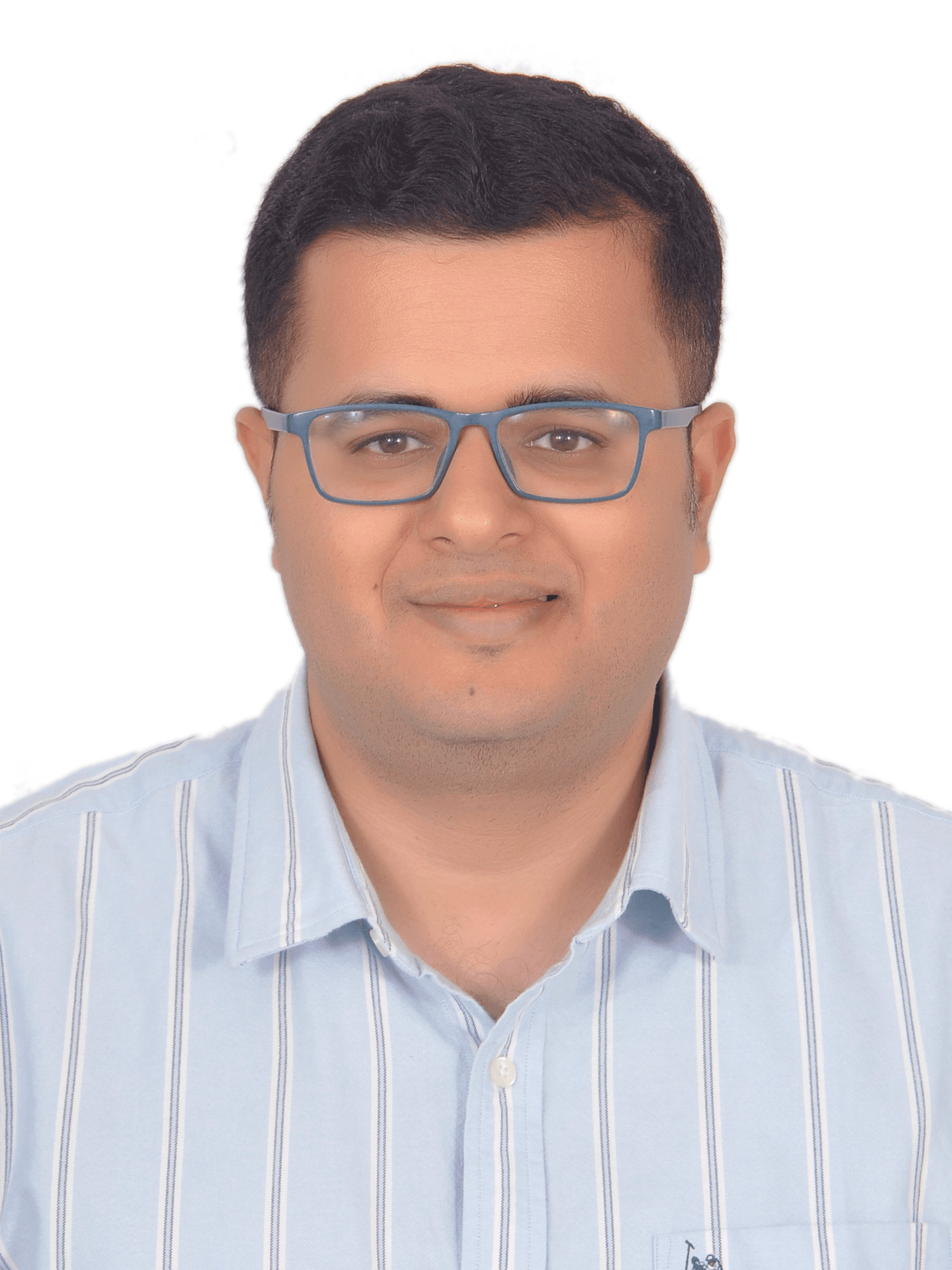
Allen Patnaik
Allen Patnaik
Allen Patnaik
Research Staff Member
Research Staff Member
Research Staff Member
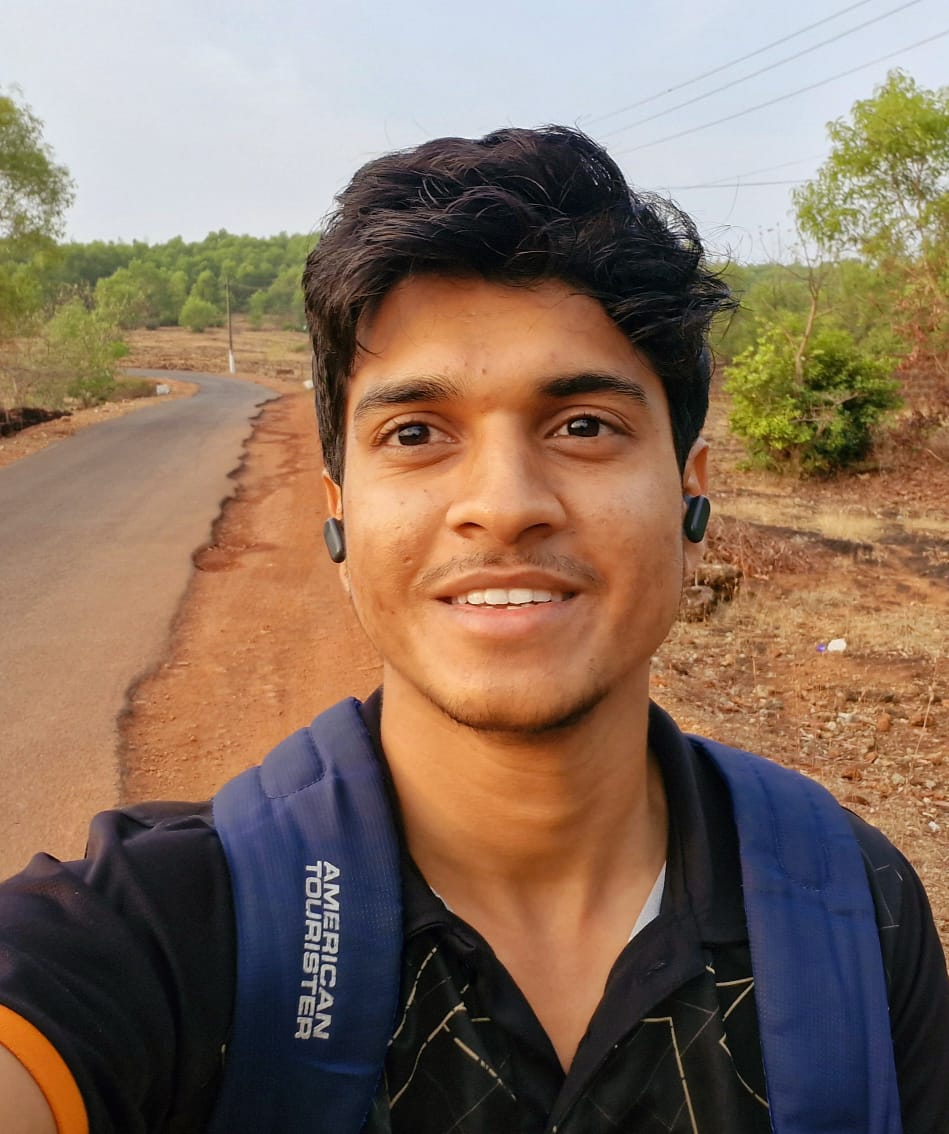
Ashish Kumar Meena
Ashish Kumar Meena
Ashish Kumar Meena
Project Associate
Project Associate
Project Associate
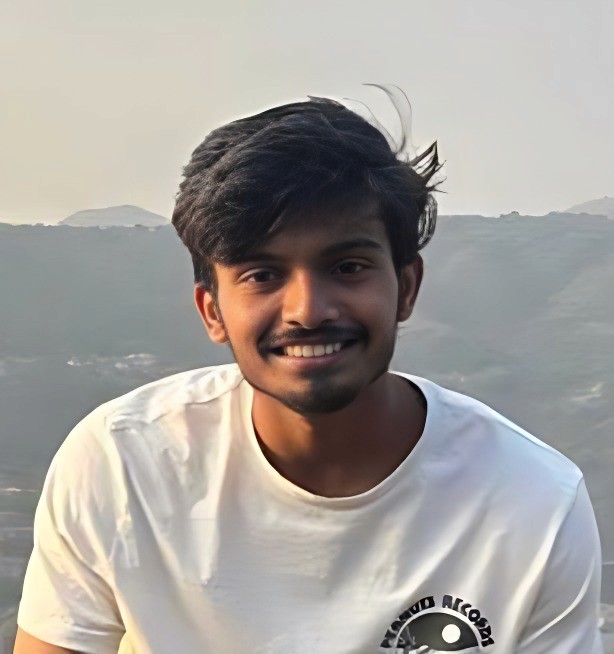
Yash Shingare
Yash Shingare
Yash Shingare
Project Associate
Project Associate
Project Associate
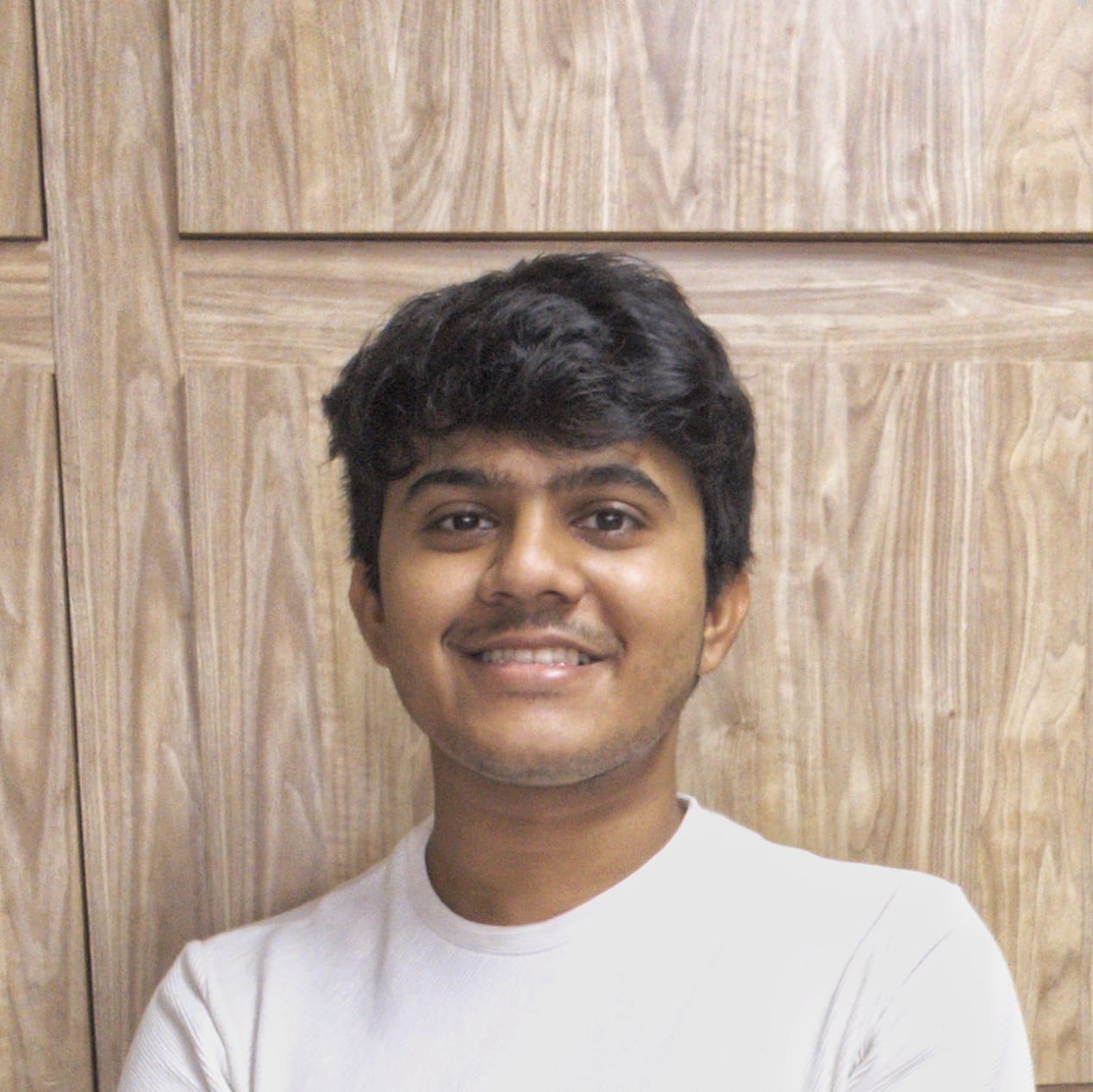
Pratham Haritz
Pratham Haritz
Pratham Haritz
Project Associate
Project Associate
Project Associate
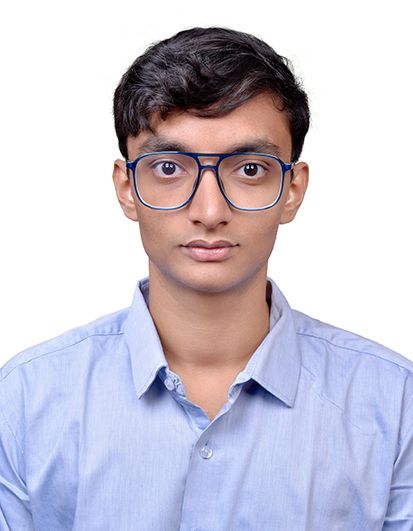
Parth Gupte
Parth Gupte
Parth Gupte
Project Associate
Project Associate
Project Associate
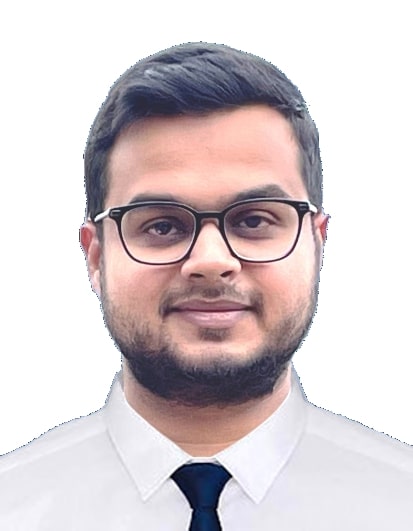
Saquib Mazhar
Saquib Mazhar
Saquib Mazhar
Research Staff Member
Research Staff Member
Research Staff Member
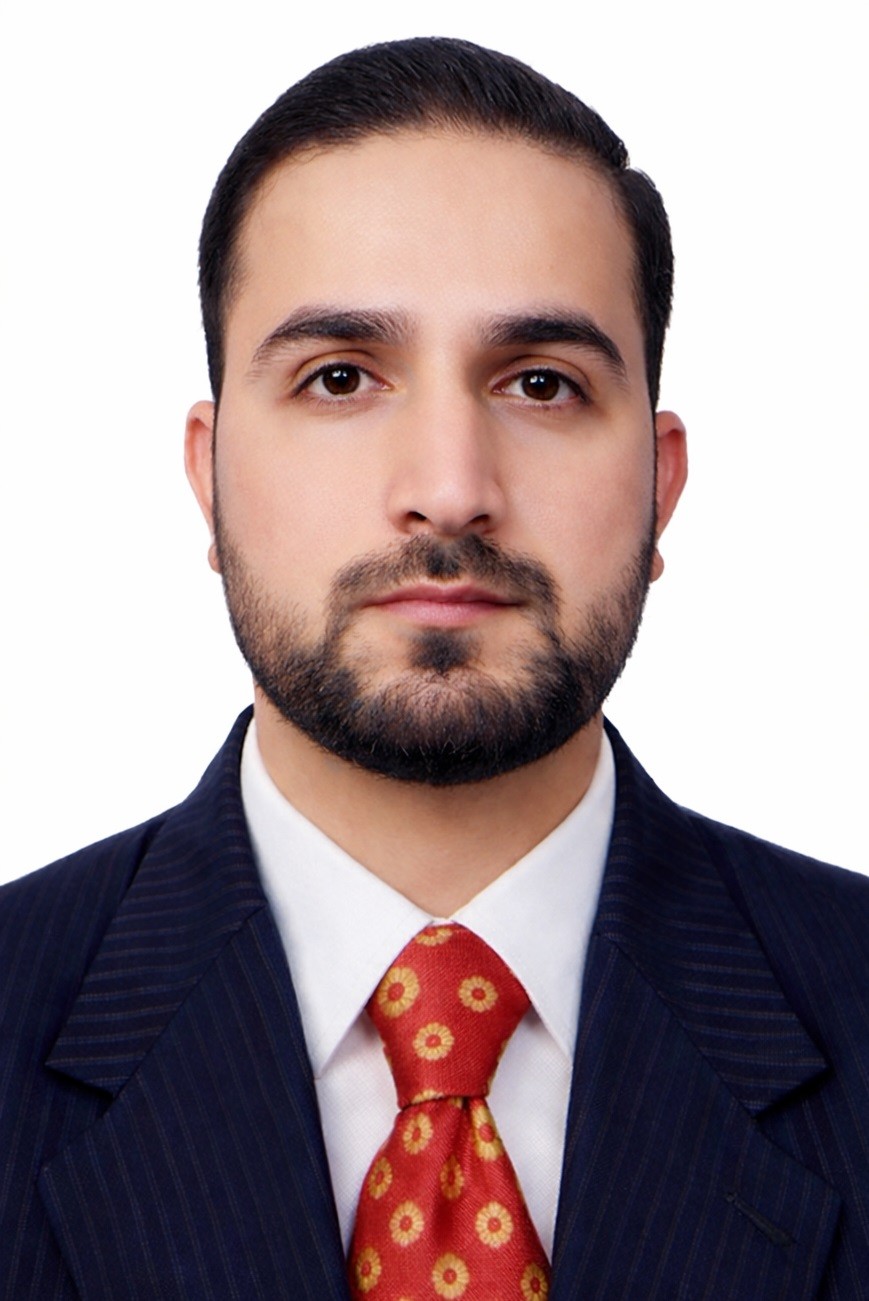
Azhar Yousuf
Azhar Yousuf
Azhar Yousuf
Research Staff Member
Research Staff Member
Research Staff Member

Akhil
Akhil
Akhil
Early Stage Researcher
Early Stage Researcher
Early Stage Researcher
Partners & Collaborators
Partners & Collaborators
Partners & Collaborators
Get Involved
Get Involved
Get Involved
We’d love to hear from potential partners, researchers, and collaborators.
We’d love to hear from potential partners, researchers, and collaborators.
We’d love to hear from potential partners, researchers, and collaborators.
Contact us at retinaldiseasedetection@tanuh.ai
Contact us at retinaldiseasedetection@tanuh.ai
Contact us at retinaldiseasedetection@tanuh.ai
The AI Centre of Excellence in Healthcare

AI Centre of Excellence in Healthcare
Indian Institute of Science
Seventh Floor, TCS Smart-X Hub
Bengaluru, India - 560 012
Email: info@tanuh.ai
Telephone: (080) 2293 4106 | (080) 2293 4107
2026 by TANUH
The AI Centre of Excellence in Healthcare
AI Centre of Excellence in Healthcare
Indian Institute of Science
Seventh Floor, TCS Smart-X Hub
Bengaluru, India - 560 012
Email: info@tanuh.ai
Telephone: (080) 2293 4106 | (080) 2293 4107
2026 by TANUH
The AI Centre of Excellence in Healthcare
AI Centre of Excellence in Healthcare
Indian Institute of Science
Seventh Floor, TCS Smart-X Hub
Bengaluru, India - 560 012
Email: info@tanuh.ai
Telephone: (080) 2293 4106 | (080) 2293 4107
2026 by TANUH